The short answer
Concrete for most houses, steel where the ground moves or the house is likely to be relevelled again. Precast concrete stumps are cheaper per stump, unaffected by water or acid soil, and carry a cast-in rod that bolts the bearer down. Galvanised adjustable steel stumps cost more, need a concrete pad poured under each one, and can be wound up or down with a spanner for the life of the house, which on reactive clay is worth a lot. Timber is not on the list. Red gum and messmate stumps lasted sixty to a hundred years in this ground, which is remarkable, and the ground has not got any drier.
Side by side
| Precast concrete | Galvanised adjustable steel | |
|---|---|---|
| Cost per stump | Lower. Stump, sole plate, ant cap. | Higher. Post, adjustable head, top plate, plus a poured pad. |
| Water and rot | Unaffected. | Unaffected if the galvanising is intact. Hot-dip only; painted or pre-galvanised tube is not the same thing. |
| Acid red soil | Unaffected over a house's life. | Galvanising is sacrificial and acid soil shortens its life. A concrete pad keeps the steel out of the soil, which is the point of the pad. |
| Reactive clay | Fixed height. If the ground moves, relevelling means packing again. | Wind the head. Relevel without a dig. |
| Low clearance | Awkward. A 1.2 metre precast stump has to be fed into a 300 mm gap. | Easier. Short posts, pad poured in place. |
| Fixing to the bearer | Threaded rod cast in, bolted through the bearer. | Top plate coach-screwed to the bearer. |
| Termites | Ant cap on top. Concrete is not eaten. | Ant cap or capped plate. Steel is not eaten. |
| Appearance under a raised house | Blocky. | Slim. The usual choice where the subfloor is visible. |
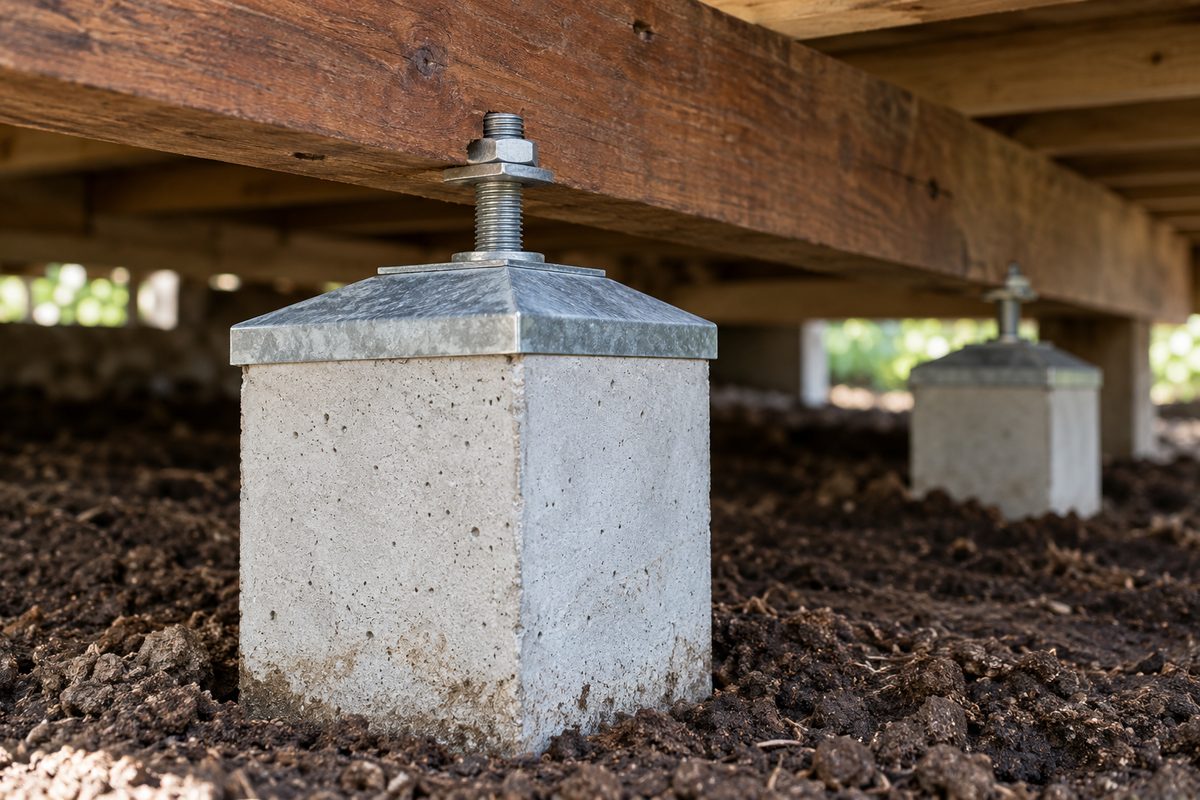
Precast concrete stumps
A square reinforced concrete post, cast with a threaded rod in the top, set in a dug hole on a concrete sole plate and backfilled. The bearer sits on a galvanised ant cap and is bolted down through the rod. Nothing in it rots, rusts or gets eaten. The limits are practical: a stump is fixed at the height it is set, so if the house settles again the fix is packing; and the stump has to be got under the house, which on a low railway-era weatherboard means feeding a heavy post sideways into a gap you can barely crawl through. For a house on the deep red soils of the Warragul and Neerim hills, where the ground drains well, concrete is the obvious choice.
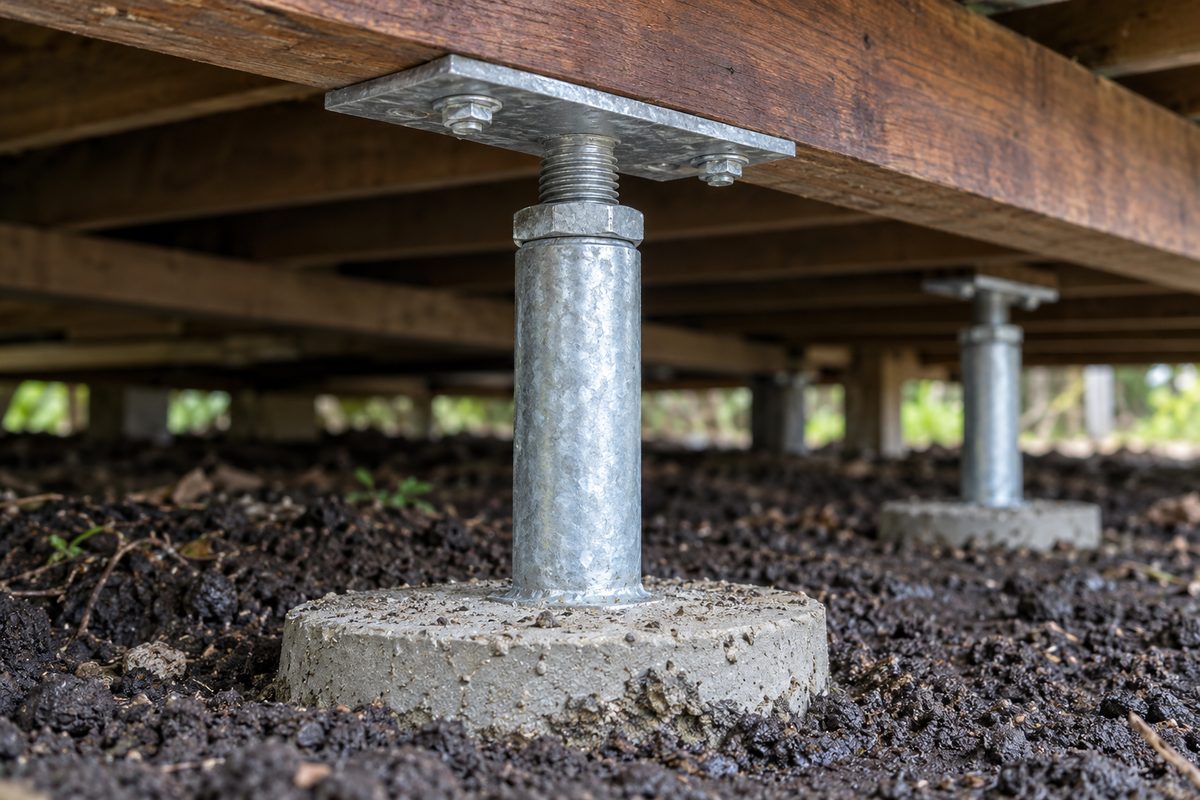
Galvanised adjustable steel stumps
A hot-dip galvanised steel post on a poured concrete pad, with a threaded adjustable head and a steel top plate screwed to the bearer. The pad does two things: it spreads the load on soft ground, and it keeps the steel out of the soil, which matters on acid ground. The adjustable head is the reason to pay for them. On the wet flats toward the Moe River, where a house relevelled in autumn can be out again by spring, a crew can come back and wind the worst corner up without jacking or digging. Steel also wins under a low floor and under a raised house where the stumps are on show.
Why not timber
Because the ground here has already shown what it does to timber. Ellinbank's Bureau of Meteorology record averages 1,100 mm of rain a year, the subfloor of an old house stays damp from May to October, the red ferrosols are moderately to strongly acidic, and the whole shire is deemed termite prone. Treated pine stumps exist, but in a subfloor that is wet half the year they are a shorter answer than concrete or steel at a similar installed price. No restumper working in West Gippsland puts timber back under a house unless the owner insists.
Mixing them under one house
Common and sensible. Concrete under the body of the house, adjustable steel on the corner that keeps moving or under the wet area, steel under the low front where there is no room to feed a precast post in. Each stump is set to firm ground and each bearer is packed to the same laser line, so the floor does not know the difference. The building permit covers both.
What the quote should say
The stump type by name, the number of each, the pad or sole plate under them, hot-dip galvanising if steel, ant caps, and the depth the holes will go to. If the quote just says new stumps, ask which.
What a better stump cannot fix
A stump of any material cannot stop the ground moving. On reactive clay the answer is depth, pads and drainage, and steel only makes the relevel afterwards easier. A stump cannot hold up a bearer that has rotted; that is timber work. And a stump cannot fix a brick veneer that is cracking on its footings, which is underpinning, however good the stump.
Check the current rules before you rely on this
This page compares stump materials for houses in Baw Baw Shire. The choice is made with the builder on the inspection and shown on the building permit. It describes the rules in general terms as they stood in October 2026. Standards, forms, thresholds and fines change.
The authoritative sources are Building and Plumbing Commission practice note BP-01, when is a building permit required, Building and Plumbing Commission (as the VBA) on registration being required for restumping and reblocking at any value, Victorian Resources Online on red ferrosols and Bureau of Meteorology climate statistics, Ellinbank Dairy Research Institute. Where anything here differs from those sources, they are right and we are not.
We are not building surveyors, engineers, planners or lawyers. For what applies to your house, ask a registered building surveyor or ring Baw Baw Shire Council on 03 5624 2411.
Accurate at the time of writing, October 2026. Always check the source before relying on it.